
Locked Out of a Crypto Wallet? Start Here
 Crypto Wallet Recovery Team
A safety-first guide for legitimate wallet owners: preserve original data, assess the evidence, understand recovery limits, and avoid scams.
Losing access to a crypto wallet does not necessarily mean the assets are gone. The greater danger is often what happens next: repeated password attempts, reinstalling a system, writing new data to a damaged drive, sending a seed phrase to a stranger, or running an untrusted “recovery tool.” These actions can turn an assessable problem into an irreversible one.
This guide gives legitimate wallet owners a careful order of operations. It is not a cracking tutorial, and no credible assessment should require you to disclose a seed phrase, private key, or password.
Stop and preserve the original state
If a wallet will not open, a password no longer works, or a device is damaged, pause repeated attempts. Some hardware devices and encrypted containers limit retries, while continued use of a drive can overwrite recoverable data.
Start with three precautions:
- Disconnect unnecessary network access. Stop suspicious apps and browser extensions to reduce the risk of data leakage.
- Preserve the original media. Do not reset the device, reinstall software, or write new files to the affected drive or memory card.
- Work from a copy. When possible, make a complete backup or forensic image of wallet files, device storage, and configuration data, then leave the original untouched.
The essential rule is simple: preserve evidence before attempting analysis. Irreversible actions belong at the end, not the beginning.
Inventory what you actually have
The recovery path depends on the available evidence, not the wallet balance. Record the following offline, without sending sensitive material through chat:
- Wallet name, version, and operating system;
- Wallet files, keystores, databases, device backups, or older exports;
- Whether a seed phrase is complete and in order, and whether an additional passphrase was used;
- Approximate creation date and last successful access;
- Public wallet addresses and transaction history;
- A timeline of device failure, deletion, updates, or migration.
Public addresses and blockchain records can help verify a timeline and recovered result. They cannot replace a private key and are not recovery credentials.
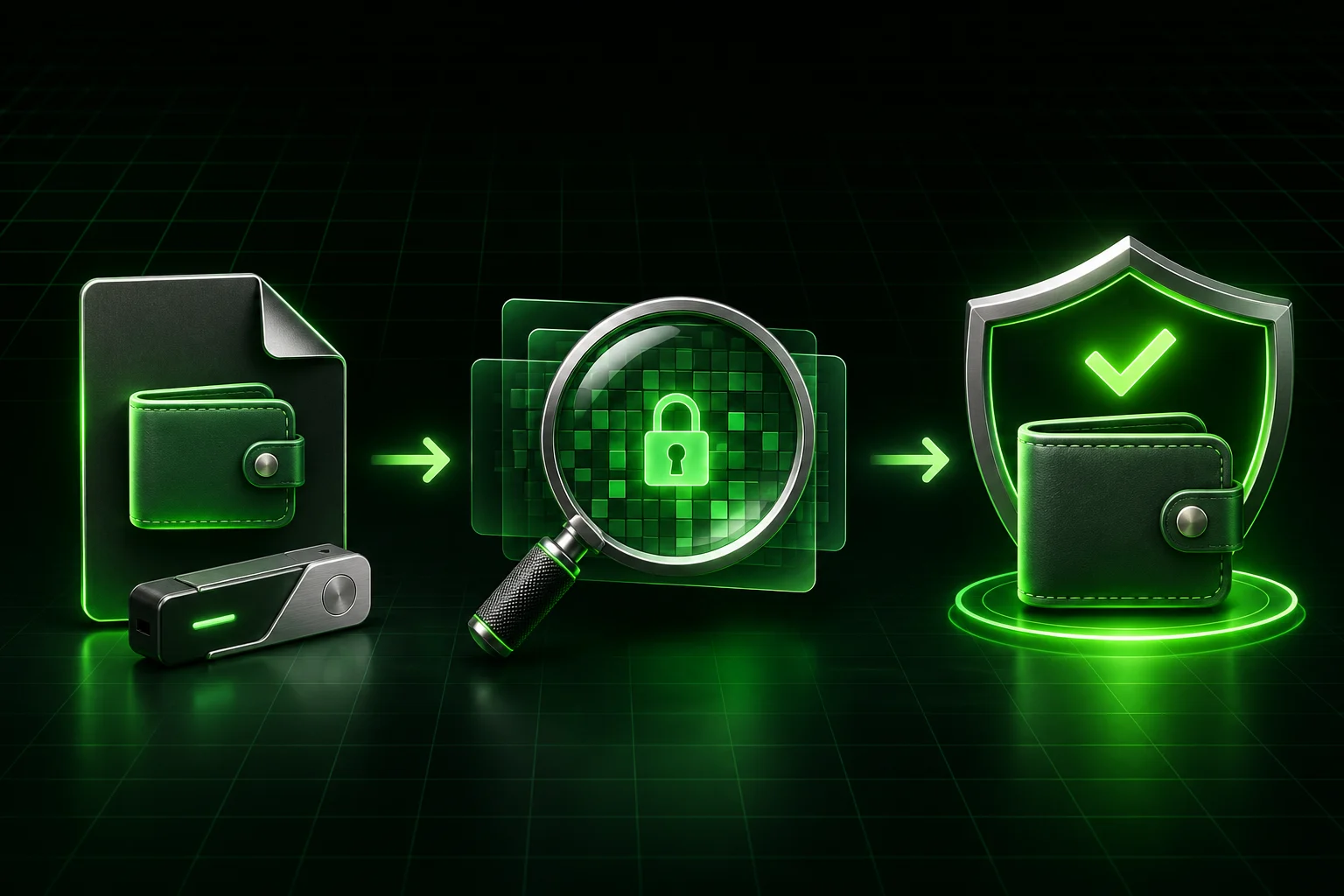
Which situations may be recoverable?
Forgotten password with an intact wallet file
This is a common assessment scenario. Feasibility depends on the wallet format, encryption method, quality of known password clues, and available computing resources. A disciplined process validates the file first and builds a constrained candidate strategy instead of attempting an unlimited brute-force search.
Missing or disordered seed words
A small number of missing, misspelled, or disordered words may sometimes be evaluated using checksum rules, the wallet type, and a known public address. Analysis should remain isolated, and any result must be verified against the expected address.
Damaged device or deleted data
This begins as a data-forensics problem. Continued use can overwrite remnants, so the priority is to image the original media and examine the copy for wallet structures and recoverable files.
No private material exists
If there is no wallet file, backup, seed phrase, private key, or verifiable password material, a private key cannot be derived from a public address. A trustworthy provider will state this limit clearly instead of promising guaranteed recovery.
Warning signs of a recovery scam
Stop immediately if someone:
- Requests your complete seed phrase, private key, or an unencrypted wallet file;
- Asks you to transfer funds to a “verification” or “safe” wallet;
- Guarantees that every wallet can be recovered;
- Tells you to install remote-control software and disable security protections;
- Cannot explain ownership verification, data retention, and deletion procedures;
- Uses unverifiable claims such as “internal nodes” or “blockchain unlocking” to pressure payment.
A legitimate assessment verifies ownership, collects only the minimum information needed to judge feasibility, and explains costs, risks, and stopping conditions before work begins.
What a responsible recovery process looks like
- Initial assessment: Identify the wallet type, failure, and available materials without collecting private keys or full seed phrases.
- Ownership verification: Use historical records, device information, and publicly verifiable data to establish a legitimate engagement.
- Plan and limits: Explain the proposed method, expected effort, fees, risks, and what cannot be guaranteed.
- Isolated analysis: Work from copies in a controlled environment while preserving logs and original evidence.
- Result verification: Confirm the expected address or signature before the owner moves funds independently.
- Data disposal: Delete working copies and sensitive material according to the agreed retention policy.
After recovery, retire the old environment
Once access is restored, create a new wallet on a trusted device, move assets to new addresses, and establish fresh backups. Do not continue using an old password, previously exposed seed phrase, compromised private key, or unknown recovery environment.
Use offline backups, separate physical locations, periodic verification, and a hardware wallet where appropriate. Document the wallet type and recovery procedure, but never store the password beside the backup.
Final thought
Wallet recovery is not a race of random attempts. It is a technical process centered on evidence preservation, legitimate ownership, and risk control. The sooner original data is protected and the more carefully assistance is selected, the more viable options remain.
For an initial feasibility review, you can request a free assessment with the wallet type, failure description, and public address. Never submit a seed phrase, private key, or password.